

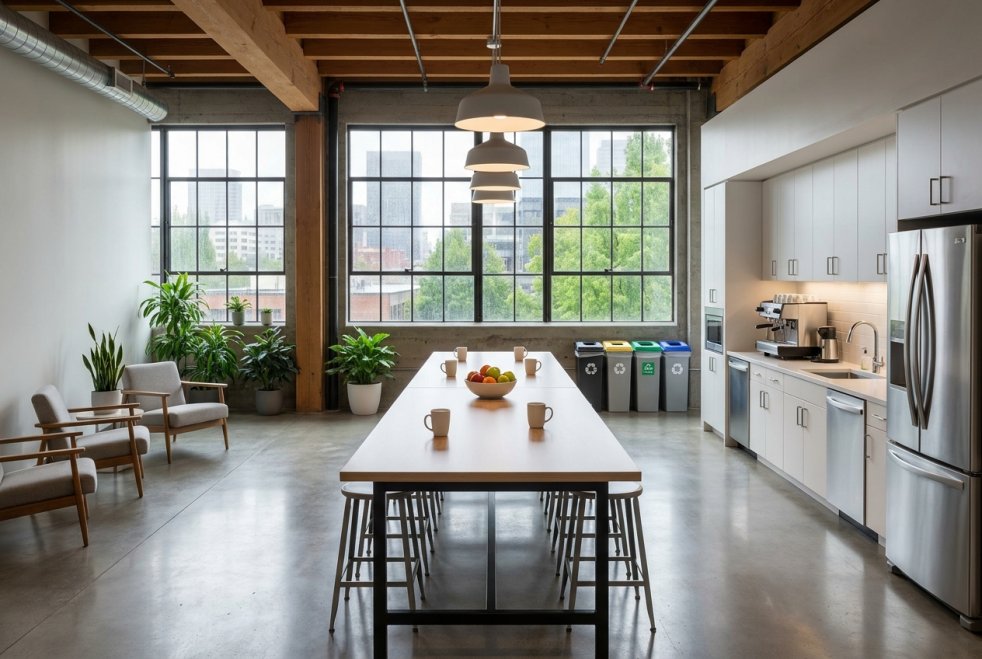
Break Room & Shared Space Standards: A Facility Management Approach for Portland Businesses
Break rooms and shared spaces are the most heavily used areas in any commercial facility. They are also the most likely to be treated as secondary zones when cleaning schedules are built.
In Portland, where mild temperatures, persistent moisture, and a dense year-round work culture create constant facility pressure, the gap between what these spaces need and what they actually receive leads to real consequences for employees and businesses alike.
Why Break Rooms and Shared Spaces Deserve a Dedicated Standard
Most commercial cleaning programs prioritize lobbies, restrooms, and conference rooms. Break rooms and shared collaboration spaces often receive a surface wipe, an emptied trash can, and little else.
The problem is that these spaces carry a heavier contamination load than almost any other zone in the building.
- Every department cycles through the break room, making cross-contamination risk higher than in most other areas
- Shared appliances, including microwaves, refrigerators, and coffee machines, accumulate bacteria and odor-causing residue quickly between deep cleans
- High-touch surfaces such as cabinet pulls, faucet handles, and appliance buttons are contacted dozens of times daily without consistent sanitation
- Portland's mild, damp climate means moisture from food prep and beverage spills lingers longer, creating favorable conditions for mold and bacterial growth in shared spaces
What Causes Rapid Deterioration in These Spaces
Understanding what drives shared space decline helps you address problems before they become visible or expensive.
- Food residue left in microwaves and on countertops breaks down and produces odors that absorb into cabinetry, walls, and flooring over time
- Portland's consistently damp air slows surface drying, raising the risk of mold in grout lines, under floor mats, and behind appliances
- Trash and compost bins that are not serviced frequently enough during warmer months generate odors that spread into adjacent work areas quickly
- Shared lounge furniture and soft seating absorb food particles, moisture, and body oils over time without periodic deep cleaning
- Hard water mineral deposits build up on sink fixtures and around drain areas that standard wiping does not remove
Warning Signs Your Current Cleaning Program Is Falling Short
These problems build gradually. By the time they are obvious to staff or visitors, the underlying issues have typically been present for weeks.
- Persistent odors in the break room that do not clear after a standard cleaning visit
- Visible residue or buildup inside microwaves, on refrigerator shelving, or around sink drains
- Sticky or grimy surfaces on shared appliance handles, countertops, or cabinet pulls
- Visible mold or mildew near the sink, under the floor mat, or along the backsplash
- Staff complaints about cleanliness or visible reluctance to use the shared space
- Staining or wear patterns on the flooring near the coffee station, trash area, or sink
Each of these signals that the current cleaning scope or frequency does not match the actual demand the space is placing on your facility.
What a Facility Management Standard Looks Like in Practice
A proper break room and shared space standard is not a generic checklist. It is a structured approach that assigns the right tasks to the right frequency based on how each zone is actually used.
- Daily sanitation of all high-touch surfaces, including appliance handles, faucets, cabinet pulls, light switches, and shared workstation areas
- Interior appliance cleaning on a defined schedule covering microwaves, refrigerator shelving, and coffee machine components
- Trash and compost removal timed to occupancy levels rather than a fixed once-per-day schedule that may not match actual fill rates
- Floor care that includes mopping under appliances and along baseboards, not just open walking surfaces
- Sink and drain maintenance to prevent mineral buildup and odor in food prep areas
- Periodic deep cleaning of soft seating and lounge furniture in shared collaboration areas
The goal is to match cleaning intensity to actual use patterns, not to a template that treats every space the same way.
Portland-Specific Factors That Affect Shared Space Maintenance
Generic facility standards do not always account for the regional conditions that affect commercial properties in the Portland metro area.
- Portland averages over 140 rainy days per year, and the persistent moisture in indoor environments slows surface drying and raises mold risk in food prep and shared spaces
- The city's strong composting and recycling culture means shared spaces often manage multiple waste streams that require proper bin placement, labeling, and consistent servicing to stay aligned with Metro guidelines
- Wildfire smoke from late summer into fall pushes fine particulate into buildings through HVAC systems and open windows, adding to the surface cleaning burden in shared and common areas
- Portland's tech, healthcare, and professional services workforce spends significant time in shared collaboration spaces beyond traditional break rooms, expanding the footprint that needs consistent maintenance
What to Do Next
System4 of Oregon works with Portland-area businesses and facility managers to build commercial cleaning programs that apply real standards to break rooms and shared spaces, not just a surface pass at the end of the day.
- Walk your break room and shared spaces, and note any odors, surface buildup, or appliance residue that has become normalized
- Review whether your current cleaning schedule assigns specific tasks and frequencies to these zones or treats them as secondary spaces
- Check whether mold risk, drain odor, and appliance buildup are being addressed on a defined schedule, given Portland's damp climate
- Ask whether your soft seating, lounge furniture, and collaboration areas are included in any periodic deep cleaning scope
Call (971) 606-5372 today to schedule a facility walkthrough and find out how a structured commercial cleaning program can bring real standards to your Portland break rooms and shared spaces.


