

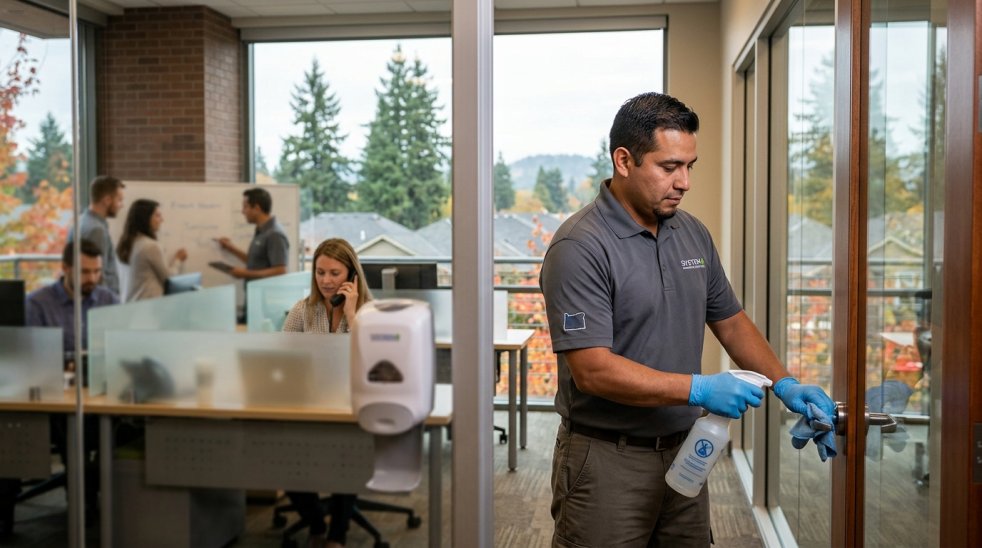
Flu Season Defense: How Regular Cleaning Keeps Your Team Healthy
As flu season sets in, businesses face a dual threat—widespread illness among staff and the operational disruptions caused by absences. Fortunately, there’s a practical solution: regular, comprehensive cleaning of high-touch surfaces and communal spaces. For companies like System4 of Oregon, this isn't just about cleanliness—it’s about maintaining productivity, reducing sick days, and maximizing ROI.
Why flu season demands more than routine cleaning
Each year, seasonal influenza and other respiratory illnesses circulate throughout workplaces, transmitted via person-to-person contact and contaminated surfaces. According to the Centers for Disease Control and Prevention (CDC), flu viruses can spread when people touch surfaces — such as doorknobs, keyboards, light switches, and communal kitchenware — then touch their mouth, nose, or eyes. Regular disinfection of those high-touch items is key to breaking the chain of transmission.
Here’s why cleaning matters in this context:
-
High-traffic surfaces = high risk: Shared offices and workstations are hotspots for viral transfer.
-
Absenteeism impacts more than the individual: When one team member is out, work cascades — others pick up slack, deadlines slip, morale dips.
-
A clean environment sends a message: It shows employees the company values health and safety, boosting confidence and engagement.
In short, cleaning isn’t just janitorial—it’s a preventive health strategy.
How routine disinfection reduces absenteeism
When your cleaning regimen moves from “once in a while” to scheduled, targeted disinfection of touchpoints, you’ll see measurable improvements:
-
Fewer surface-borne pathogens
A quality cleaning program focuses on surfaces like door handles, light switches, shared office equipment, elevator buttons, and break-room tables. By routinely disinfecting them, you reduce the number of viral particles circulating in your workspace. -
Reduced transmission between employees
Less contamination means fewer chances for a “bringing it in” scenario. Today’s digital work environment still relies on in-office presence, and physical proximity means germs still pass around. Cleaning helps lower that risk. -
Lower absenteeism → more productivity
Suppose your team of 50 has an average of 4 sick days per flu season per person. That’s 200 sick days. If a cleaning program cut that by 25 % (a conservative estimate), you’d avoid 50 sick days. That’s 50 productive days your team is on the job instead of recovering. -
Consistent operations = cost savings
Avoiding even a handful of sick days means you don’t need to pay overtime, hire temporary staff, or push deadlines. The ripple effect helps maintain customer service levels, project flow, and overall business continuity.
The ROI: What fewer sick days mean for your bottom line
Let’s break down a simple return-on-investment estimate to demonstrate the value of a targeted cleaning strategy:
-
Team size: 50 employees
-
Average fully burdened daily cost per employee: $300
-
Annual average sick-days per employee during flu season: 4 (200 total)
-
Assume routine disinfection reduces sick-days by 25 % → 50 fewer sick-days
-
Cost savings: 50 days × $300 = $15,000 annually
If your cleaning services cost, say, $7,000 per year, you’re nearly doubling your investment in terms of avoided lost work. And that’s just one dimension: less disruption, better morale, fewer errors, stronger client service.
In other words: a proactive cleaning strategy isn’t an expense—it’s a health investment with visible financial benefits.
How System4 of Oregon supports flu-season defense
At System4 of Oregon, we specialize in recurring commercial cleaning and janitorial services designed to support healthy workspaces. Here’s how we tailor our approach for flu-season readiness:
-
Scheduled touch-point cleaning: We identify and disinfect high-traffic surfaces on a regular schedule—door handles, light switches, communal electronics, break-rooms, restrooms.
-
Flexible timing: We can perform services outside business hours or during low-traffic windows, reducing disruption to your team.
-
Green cleaning options: We use EPA-approved disinfectants and environmentally sensible practices so your facility remains both healthy and sustainable.
-
Accountability and tracking: We maintain checklists and log cleaning trips so you know exactly when and what was cleaned—important for audit trails and employee confidence.
-
Custom service plans: From small offices to large industrial spaces, we tailor the frequency and depth of cleaning according to your needs and budget.
If you’re experiencing upticks in absenteeism or you simply want to lock in operational consistency during flu season, consider our services. You can call us at (971) 606-5372 for a free consultation and quote.
Take proactive steps today
-
Schedule a cleaning audit — We’ll review your facility, map out key touch-points, and recommend a cleaning frequency.
-
Communicate with your team — Let them know the cleaning program is in place and why it matters; employee buy-in enhances effectiveness.
-
Track absenteeism metrics — Monitor sick days before and after the cleaning regimen to quantify your return.
-
Adjust as needed — Flu peaks, facility usage changes, and new communal zones may emerge. A flexible provider adjusts accordingly.
Final thoughts
Flu season doesn’t have to mean operational chaos. With strategic cleaning from System4 of Oregon, you can turn your facility into a line of defense — keeping your team healthy, your operations consistent, and your finances optimized. The savings in sick days alone make it more than worth the upfront commitment.
Ready to get started? Reach out to us at (971) 606-5372 and let’s design your flu-season defense plan together.


