

3 Hidden Germ Hotspots You’re Overlooking in the Office
Oregon businesses care deeply about wellness, sustainability, and employee experience. But even the healthiest workplaces can unknowingly harbor germs in places no one thinks to clean until the sniffles start spreading. The truth? Germs don’t care how modern your office looks or how strong your culture is. They settle where human behavior gives them the best chance to thrive. Here are three overlooked hotspots worth paying attention to.
1. Desks That Double as Dining Tables
Lunch at the desk saves time, but it also introduces bacteria into a space meant for work, not food.
Research shows that office desks can contain hundreds of times more bacteria than a toilet seat, largely because crumbs, spills, and unwashed hands meet rarely disinfected surfaces.
Common problem areas include:
- Desktop surfaces
- Desk drawers and handles
- Phone receivers and headsets
2. Office Restrooms… Beyond the Obvious Spots
Most offices focus restroom cleaning on sinks and toilets. That’s necessary, but not sufficient. High-touch areas like stall locks, paper towel dispensers, and door handles often receive less attention. According to hygiene studies, these surfaces can harbor significant levels of bacteria, even when the restroom looks spotless. If employees are washing their hands properly, then touching contaminated surfaces right after, it defeats the purpose.
3. “Community” Items No One Claims Responsibility For
Every office has them:
- Shared pens
- Clipboards
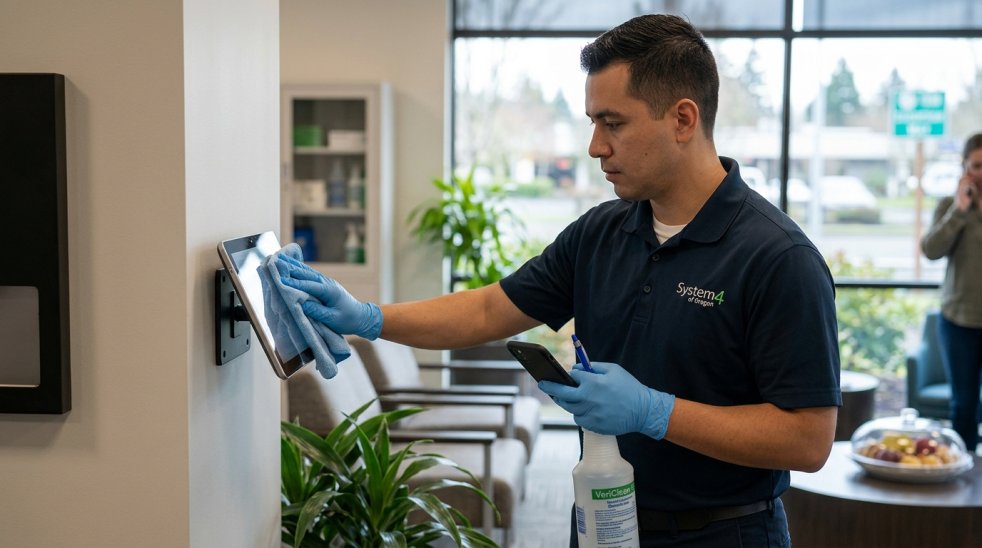
- Sign-in tablets
- Supply cabinets
Because these items don’t belong to any one person, they rarely get cleaned. Yet they’re handled constantly, making them ideal germ transfer points, especially in offices with rotating staff or frequent visitors.
Why Oregon Employers Should Care
Employee wellness isn’t just a benefit; it’s a business strategy. The CDC reports that workplace illness leads to millions of lost workdays annually, impacting productivity, morale, and client service.
A clean environment supports:
- Fewer sick days
- Better focus and energy
- A workplace employees feel good about being in
Instead of asking employees to clean behind one another, ask a better question: Is our cleaning plan aligned with how our office is actually used? Take five minutes this week to walk through your office and list everything people touch daily. If the list surprises you, it’s time to talk with System4 Oregon about a cleaning strategy that protects both people and performance.


