

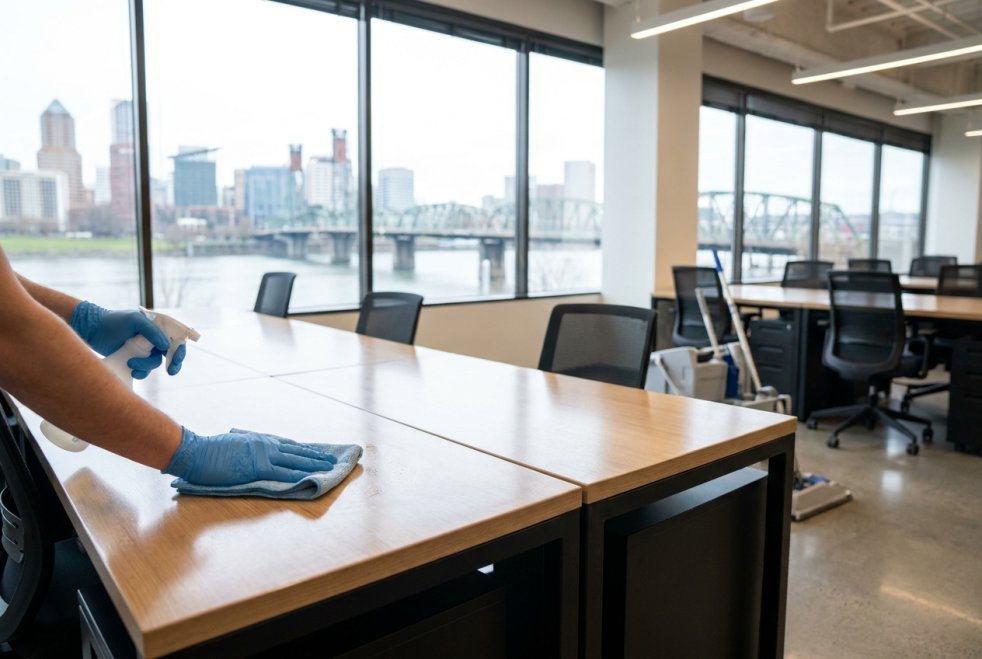
Managing Sanitization Standards in Shared Work Environments in Portland
Shared work environments are a fixture across Portland. Open-plan offices in the Pearl District, coworking spaces in Southeast, multi-tenant buildings in Lloyd Center, and shared breakrooms throughout the metro all create the same core challenge: multiple people using the same surfaces and facilities throughout the day. When sanitization standards are undefined or inconsistently applied, those spaces become a measurable health risk.
Here is what you need to know to manage sanitization effectively in any shared workspace, with Portland's specific climate and building conditions in mind.
Why Shared Spaces Require a Defined Sanitization Plan
A private office used by one person is straightforward to maintain. A shared workspace used by dozens of people across multiple shifts is a different problem entirely. Contamination accumulates faster, responsibility gets diffused, and no single person feels accountable for keeping surfaces clean.
Without a documented sanitization program, high-touch surfaces go unaddressed for days at a time. That is not a minor inconvenience. It is a real liability that affects employee health, productivity, and your reputation with tenants and clients.
How Portland's Climate Makes This Harder Than It Looks
Portland averages around 144 rainy days per year, and residents spend a significant stretch of the year indoors in close proximity to one another. Wet weather means more moisture tracked into buildings, which raises interior humidity and creates conditions where bacteria and mold can take hold on surfaces and in HVAC systems.
Older commercial buildings in neighborhoods like Old Town and the Central Eastside often have limited ventilation that was not designed with modern air quality standards in mind. Add in late summer wildfire smoke from regional fires, which forces windows closed and pushes fine particulate onto every shared surface, and you have a year-round sanitization challenge.
- High indoor humidity encourages mold growth on surfaces and inside ductwork.
- Poor ventilation allows airborne pathogens to linger longer in shared spaces.
- Wet entryways and tracked-in debris increase surface contamination near building entrances from fall through spring.
- Wildfire smoke particulate settles on shared surfaces and aggravates respiratory conditions for occupants.
The High-Touch Surfaces That Get Missed Most Often
Most facilities do a reasonable job cleaning visible surfaces like floors and countertops. The real problem is the surfaces people touch constantly but rarely think about. These are the areas where pathogens transfer most efficiently between occupants.
- Door handles, push plates, and kick plates at every entry point.
- Elevator buttons and stairwell railings.
- Shared keyboards, mice, and phone handsets.
- Breakroom appliance handles, including microwaves, refrigerators, and coffee machines.
- Light switches, thermostat panels, and copier touchscreens.
- Restroom faucet handles and paper towel dispensers.
If your current cleaning program does not specifically address these surfaces on a daily basis, your sanitization standards have a gap worth closing right away.
Warning Signs Your Sanitization Program Is Falling Short
Sanitization failures do not always show up as visible grime. Watch for these indicators that something is off in your shared workspace.
- A noticeable increase in employee sick days, especially from October through March.
- Persistent odors in breakrooms, restrooms, or near HVAC vents.
- Sticky or visibly soiled surfaces in common areas between scheduled cleanings.
- Complaints from tenants or staff about the condition of shared spaces.
- No documentation showing when sanitization tasks were last completed.
Any one of these signals is worth taking seriously. Multiple signals together mean your current program needs a full review.
Building a Sanitization Protocol That Actually Works
Effective sanitization in shared environments requires more than wiping surfaces down with whatever cleaner is on hand. It requires defined products, documented procedures, and consistent frequency tied to actual usage patterns.
- Use EPA-registered disinfectants appropriate for the surface type and the pathogens you are targeting.
- Follow proper dwell times. Most disinfectants need to remain wet on a surface for 30 seconds to several minutes to be effective.
- Separate cleaning (removing dirt and debris) from disinfecting (killing pathogens). Both steps are necessary and not interchangeable.
- Assign clear responsibility for each zone within the shared space so nothing gets skipped between visits.
- Document completed tasks with a log that building management or tenants can review on demand.
Setting the Right Sanitization Frequency
Not every surface in a shared workspace needs the same attention. Frequency should be tied to how often a surface is touched and how many people are using the space each day.
High-touch surfaces in heavily used areas should be disinfected at least once daily, and more often during peak occupancy or flu season. Lower-traffic zones can follow a weekly or biweekly schedule. The goal is to match your effort to actual risk rather than applying a single standard everywhere regardless of use patterns.
What a Professional Cleaning Partner Brings to the Table
Managing sanitization across a shared workspace does not work well when it is left to whoever has a spare moment. Professional crews bring trained protocols, commercial-grade products, and accountability systems that in-house staff cannot replicate consistently over time.
System4 of Oregon works with Portland-area businesses to develop sanitization programs built around their actual facilities, occupancy levels, and compliance requirements. That means a documented plan, the right products for the Pacific Northwest's conditions, and a team that shows up on schedule every time.
Take Control of Your Shared Workspace Sanitization
Shared work environments do not have to be a liability. With the right protocols in place and a professional commercial cleaning partner behind your program, you can maintain standards that protect your people, your tenants, and your reputation through every season Portland brings.
Ready to build a sanitization program that fits your facility? Call System4 of Oregon today at (971) 606-5372 to schedule a walkthrough and get a plan in place.


