

How Portland Retailers Balance Cleanliness, Safety, and Customer Experience
Retail store managers walk a tightrope every single day. Customers expect a bright, welcoming space the moment they walk in, employees need a safe environment to do their jobs, and the building itself has to hold up under heavy foot traffic, Oregon rain, and the wear of daily retail operations. Getting all three right at once, cleanliness, safety, and experience, takes more than a mop and a checklist. It takes a facility management plan built around the realities of running a store in the Portland metro.
Why Clean Retail Space Is a Revenue Driver, Not Just Housekeeping
Retailers often treat cleaning as a cost center, something to minimize rather than manage strategically. That mindset misses what is actually happening on the sales floor. Shoppers form an opinion about a store's quality within the first few seconds of walking in, and a smudged glass door or a sticky floor tile undoes marketing spend faster than almost anything else. Compare two stores selling the same products at the same prices: one with visible dust on shelving and a musty smell near the fitting rooms, the other with polished floors, fresh air, and organized displays. Shoppers linger longer, trust the merchandise more, and spend more freely in the second store. Cleanliness is not cosmetic. It is part of the product experience customers are paying for.
How Often Should Retail Floors Be Cleaned in the Portland Area?
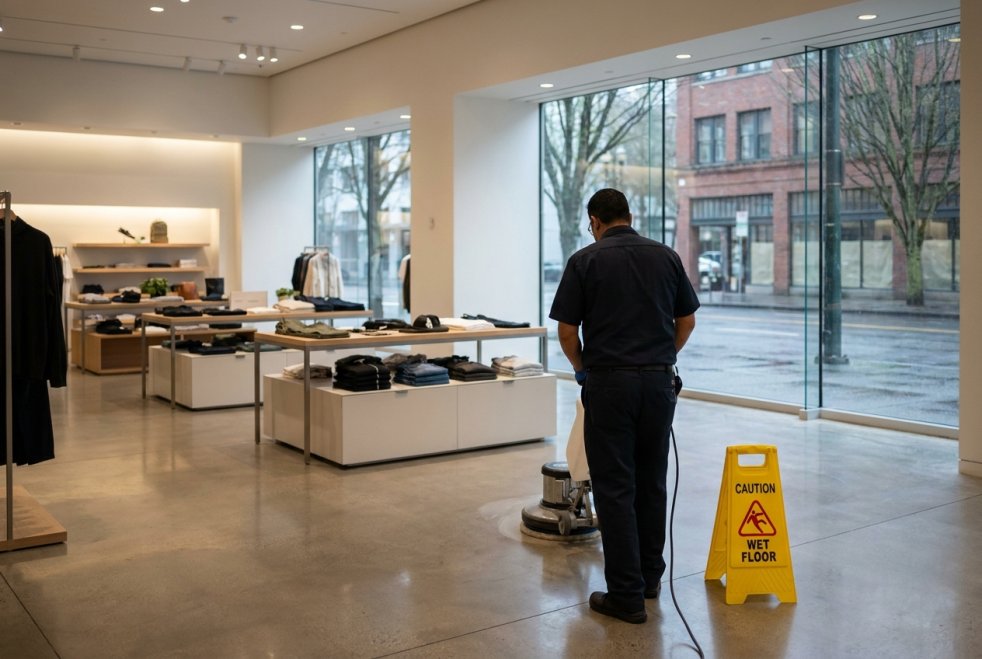
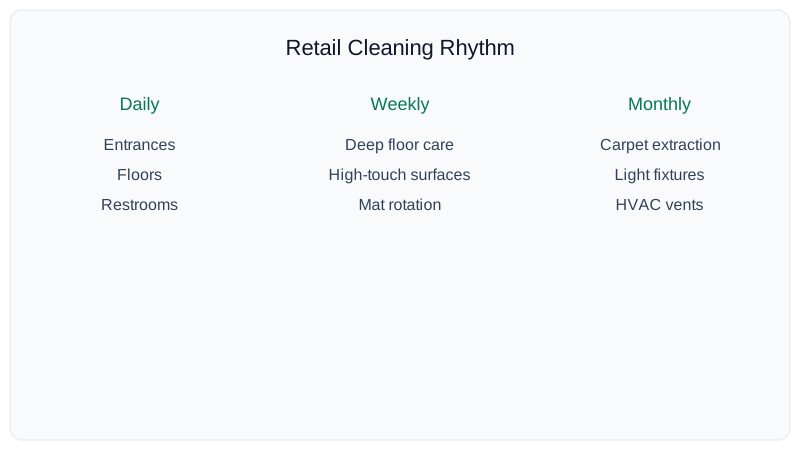
High-traffic retail floors in the Portland area should be swept or dust mopped daily and wet mopped or auto-scrubbed at least three to five times per week, with entryways cleaned more frequently during the rainy season from October through April. Oregon's roughly 36 inches of annual rainfall means tracked-in moisture, grit, and leaf debris accumulate fast near doors, and that buildup becomes a slip hazard within hours, not days.
Entryway zones: The first 10 to 15 feet inside any door absorbs most of the moisture and grime a store sees. This zone needs walk-off mats, daily mopping, and mat cleaning or rotation at least weekly during wet months to keep water from migrating onto hard flooring.
Sales floor and aisles: These areas need daily dust mopping and dedicated attention to spills, which should be addressed the moment they happen rather than waiting for the closing crew.
Restrooms and break areas: Retail restrooms typically need cleaning and disinfecting at least twice during business hours, not just once at open or close, particularly in stores with public restroom access.
A Slip-and-Fall Scenario Every Portland Retailer Should Recognize
Picture a mid-size home goods store near a busy shopping corridor on a Tuesday in November. Rain has been falling since morning, customers track in wet leaves and grit, and the entry mats are soaked through by lunchtime. A regional manager doing a routine floor inspection almost slips near the automatic doors. No incident report gets filed because nothing happened, but the near miss is a warning sign the store's mat rotation and mid-day mopping schedule cannot keep pace with actual weather conditions. Two weeks later, without a schedule change, a customer does fall in that same spot. That is the gap between reactive cleaning and a facility plan built for the Portland climate.
Oregon OSHA holds employers responsible for maintaining walking surfaces free of recognized hazards, and slip-and-fall claims are among the most common liability issues retailers face. A documented commercial cleaning schedule, with time-stamped logs, is often the difference between a defensible safety record and a costly settlement.
What Does a Complete Retail Cleaning Program Actually Include?
A complete program covers far more than visible surfaces. It is built around zones, frequency, and accountability. Here is how a retail facility plan comes together from the ground up:
- Assess traffic patterns. Entry points, checkout lines, and fitting rooms need more frequent attention than storage or back-office areas.
- Set zone-specific frequencies. High-touch surfaces like door handles, checkout counters, and card readers get disinfected multiple times daily; lower-traffic zones get daily or weekly attention.
- Build in weather triggers. Entry mats and floor care schedules shift automatically once seasonal rain begins, rather than waiting for a manager to notice the floors are wet.
- Schedule deep cleaning. Carpet extraction, hard floor stripping and refinishing, and HVAC vent cleaning happen on a monthly or quarterly rotation, timed around store hours to avoid disrupting sales.
- Document everything. Time-stamped cleaning logs protect the retailer if a safety incident is ever questioned and give management visibility into what is actually happening on the floor.
Balancing a Spotless Store With a Store That Is Still Open for Business
The hardest part of retail cleaning is rarely the cleaning itself, it is doing it without getting in the way. A grocery store cannot close aisles for two hours to strip and wax the floor on a Saturday afternoon, and a boutique cannot smell like bleach when customers are trying on clothes. This is where scheduling expertise matters as much as cleaning technique. Overnight and early-morning crews handle the heaviest work, deep floor care, restroom sanitizing, and trash removal, while daytime porters handle spot cleaning, spill response, and restocking supplies without ever disrupting the shopping experience. Retailers who try to handle this in-house with existing staff often end up with neither a clean store nor efficient employees, because cleaning gets squeezed into whatever time is left over after ringing up customers.
Seasonal Timeline for Portland Retail Facility Care
Portland's weather swings hard enough between seasons that a facility plan built for July will fail in December. A seasonal approach keeps the store ahead of the conditions instead of reacting to them.
- Fall (September to November): Increase entry mat rotation, add leaf and debris removal near doors, and start disinfecting more frequently as flu season and indoor crowding begin.
- Winter (December to February): Expect the heaviest rain and mud tracking, budget for extra mopping shifts, and check HVAC filters more often since doors open and close constantly in cold weather.
- Spring (March to May): Address window and glass cleaning as pollen coats storefront glass, and schedule carpet extraction to remove months of tracked-in grit.
- Summer (June to August): Shift focus to dust control from open doors and patio traffic, and take advantage of drier weather for exterior pressure washing and hard floor refinishing.
How Much Does Professional Retail Facility Cleaning Cost?
Most retail cleaning contracts in the Portland area range from $0.12 to $0.30 per square foot per cleaning visit, depending on frequency, square footage, and the level of detail work required, which typically puts a 3,000 to 8,000 square foot store between $800 and $3,500 per month for a standard nightly service plan.
Small specialty stores: A boutique or specialty retailer under 2,500 square feet with nightly service and weekly deep cleaning typically lands between $600 and $1,200 per month.
Mid-size retail: Stores in the 5,000 to 15,000 square foot range, including grocery, home goods, and department-style layouts, usually run $1,800 to $5,000 monthly depending on restroom count and floor type.
Large format retail: Big-box or warehouse-style stores often require dedicated day porters plus overnight crews, pushing monthly costs to $6,000 or more, though this includes far more square footage and service hours.
These ranges vary based on flooring material, number of restrooms, and how much detail work like window cleaning or floor waxing is bundled into the contract. A walkthrough of the actual space is the only reliable way to get an accurate number.
Why Portland Retailers Choose a Dedicated Facility Partner
Handling cleanliness, safety, and customer experience with the same in-house crew that is also stocking shelves and running registers rarely works long-term. System4 of Oregon builds retail facility programs around each store's traffic patterns, square footage, and the realities of Oregon's wet season, so cleaning happens on a schedule that protects both the customer experience and the bottom line.
Get a Facility Plan Built for Your Store
A clean, safe, well-run retail space does not happen by accident, it happens with a plan built around your traffic, your square footage, and Oregon's weather. Call (971) 606-5372 to schedule a walkthrough with System4 of Oregon and get a facility cleaning plan designed for how your store actually operates.
Frequently Asked Questions
Do retail stores in Oregon have specific cleaning or safety regulations to follow?
Oregon OSHA requires employers to maintain walking and working surfaces free of slip, trip, and fall hazards, and retailers are expected to have reasonable cleaning and inspection practices in place, especially during wet weather months. There is no single statewide retail cleaning code, but documented cleaning schedules are considered standard due diligence if an incident is ever investigated.
Can one cleaning company handle multiple retail locations across the Portland metro?
Yes, most established commercial cleaning contractors service multiple locations under one contract, using standardized checklists and consistent quality control so a chain with several stores across the region gets the same level of service at each site.
How do I know if my current cleaning schedule is not keeping up?
Warning signs include recurring complaints about odors or dirty restrooms, visible grime buildup between scheduled cleanings, an uptick in slip-related near misses, and staff spending time on cleaning tasks that pull them away from customer service.


